Blog
How to Read an Herbal Product Label: Ingredients, Origin and Packaging

Have you ever opened an herbal product listing and wondered what the ingredient names, origin statement or pack size really mean? You are not alone. Reading an herbal product label carefully can make shopping clearer and help you compare products with confidence. This practical guide explains what to look for, what questions to ask and which details should never be overlooked. A label is a source of product information—not, by itself, proof of safety, effectiveness or regulatory approval.
How do you read an herbal product label step by step?
Start with the product identity, then move through ingredients, quantity, origin, directions, warnings and seller information. If any essential detail is missing or contradictory, pause and ask the seller for clarification before purchasing.
1. Confirm the product name and format
Check the exact product name and form—such as powder, cream or capsules. Products with similar names may have different compositions or instructions. Make sure the product title on the website matches the name shown on the packaging.
2. What should you look for in an herbal ingredient list?
Read every ingredient as printed. Labels may use common names, botanical names or formulation terms. Do not assume two similarly named ingredients are identical, or that “natural” automatically means harmless. If the list is unclear, incomplete or inconsistent with the product page, request clarification.
3. Country of origin vs. “packed in”: what is the difference?
These statements answer different questions. The stated country of origin identifies where the product or material is sourced or originates; “packed in” identifies the location where packing took place. A product can be sourced in one country and packaged in another. Check both statements rather than treating them as interchangeable.
4. How do you check herbal product pack size and quantity?
Look for net weight (g), volume (ml) or count (for example, number of capsules). Compare like with like when evaluating price: grams of powder cannot be directly equated with millilitres of cream. Also check whether the pictured pack and the stated quantity match.
| Label detail | What it tells you | What to verify |
|---|---|---|
| Product name | Identity and format | Matches the package and listing |
| Ingredients | What the label declares | Full list, clear names, no discrepancies |
| Net quantity | Weight, volume or count | Correct unit and pack size |
| Country of origin | Stated source | Specific origin wording on label |
| Packed in | Packaging location | Not confused with origin |
| Directions and cautions | Label instructions and precautions | Format-specific directions, storage, warnings |
| Batch/date details | Traceability and date information | Legibility and relevance to the product |
5. Read directions, warnings and storage information
Review directions, warnings, storage instructions, expiry or best-before information, and any stated contraindications. Never assume instructions for one format apply to another. Stop and seek qualified advice if you are uncertain about suitability, especially if you have a health condition or take medicines.
6. How can you evaluate herbal product claims?
Claims on a label or website should be treated as claims unless supported by appropriate evidence. Be cautious about guarantees, dramatic promises, testimonials presented as proof, or statements that imply a product treats a medical condition. Ask what evidence, safety information and relevant product-status documentation the seller can provide. In the UK, herbal products and cosmetics may have different applicable requirements depending on their classification; do not infer classification from packaging alone.
7. Check the seller’s policies before ordering
- Look for a working customer-support contact.
- Review delivery, returns and refund terms.
- Keep the order confirmation and packaging.
- Ask questions about unclear product details before checkout.
What product label details does Simba Herbals UK provide?
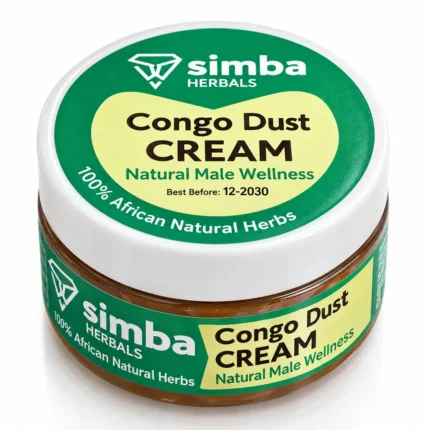
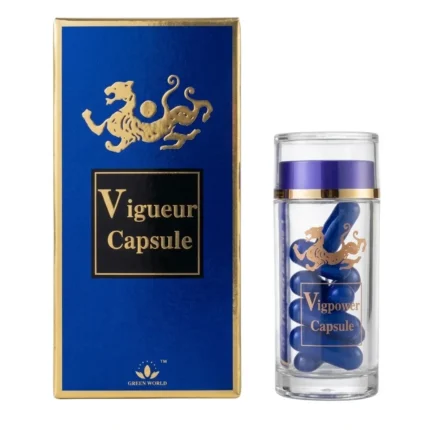
Simba Herbals UK product pages present available product names, pack sizes and label-listed ingredient information. Customers can contact care@simbaherbals.com for questions about a listing or order. For examples, see the Congo Dust (Ankoro) Powder listing, Congo Dust (Ankoro) Cream listing and GreenWorld VigPower Capsules listing. You may also review our returns and refunds policy.
Frequently asked questions about herbal product labels
What information should an herbal product label include?
Depending on the product type and applicable rules, a label may need product identity, ingredients, quantity, origin, directions, warnings, storage details, batch information and responsible business details. Requirements vary by classification and market, so this checklist is not a substitute for regulatory advice.
Does “natural” mean an herbal product is safe?
No. “Natural” does not guarantee safety, suitability or absence of side effects. Check the full label and seek professional advice where appropriate.
Is “country of origin” the same as “packed in”?
No. Origin refers to the stated source, while “packed in” describes the packaging location. These can be different countries.
How can I compare herbal products by price?
Compare the same measurement unit and format where possible, such as price per gram for powders or price per millilitre for creams. Also compare ingredients and label details, not only the headline price.
What should I do if the ingredients are missing or unclear?
Contact the seller and ask for a clear ingredient list and clarification. If essential details remain unclear, consider postponing the purchase.
Can an herbal product label prove that a product works?
No. A label communicates information and claims; it does not independently establish effectiveness. Look for appropriate evidence and consult a qualified professional for health-related questions.
Editorial note: This article provides general label-reading information, not medical or regulatory advice. It does not verify the safety, effectiveness or legal classification of any specific product.